
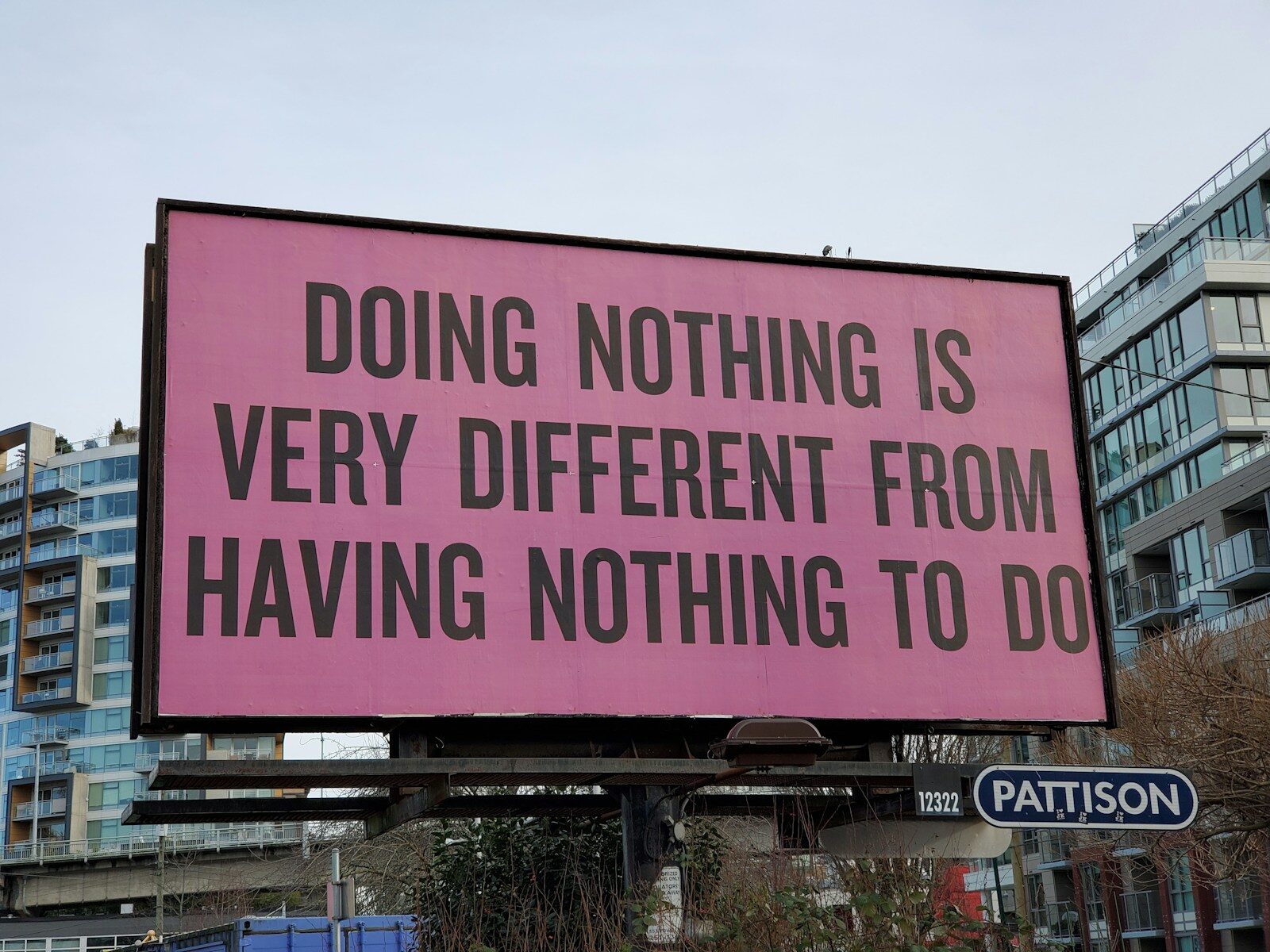
We have become remarkably good at filling our time. There is always another email to answer, another programme to watch, another job to tick off the list or another notification asking for our attention. Even our leisure time can become scheduled and productive. Yet sometimes the most valuable thing we can do with an hour is absolutely nothing.
Doing nothing has developed an unfortunate reputation. It can sound lazy, unproductive or even wasteful, particularly when life is busy and there always seems to be something that needs doing. But empty time has a purpose. It gives the mind room to wander, the body an opportunity to relax and the day a little space in which nothing is expected of us.
Rediscovering Unstructured Time
Children are often naturally good at this. Give them a garden, a cardboard box or a patch of grass and they can spend an afternoon inventing their own entertainment. Somewhere along the way, many adults lose that ability.
We start to measure our days by what we have achieved. A quiet Sunday can feel strangely uncomfortable if there is no shopping to do, room to tidy or destination to visit.
Instead of seeing unstructured time as something that needs filling, try allowing some of it to remain deliberately empty. Sit in the garden with a cup of tea. Look out of the window. Listen to the birds. Take a slow walk without turning it into exercise. Let your thoughts drift rather than immediately reaching for your phone.
You may be surprised by how difficult it feels at first.
Your Brain Needs a Break From Input
Modern life provides an extraordinary amount of stimulation. Phones, television, social media, podcasts, music and constant communication mean that silence can be surprisingly rare.
There is nothing inherently wrong with any of these things, but the brain benefits from periods when it isn’t being asked to process new information.
This is one reason seemingly ordinary activities can become so restorative. Washing dishes by hand, gardening, knitting or sitting on a train without scrolling through your phone can create small pockets of mental quiet.
You don’t necessarily need a weekend away or a week-long digital detox. Sometimes ten minutes of doing absolutely nothing is enough to create a little breathing space.
Letting Yourself Be Bored
Boredom isn’t always something that needs solving.
When we are bored, our minds start looking for somewhere to go. We notice things we might otherwise overlook. We daydream. We remember something we’d forgotten. We make connections between ideas. Occasionally, we even come up with something creative.
Try leaving your phone in another room the next time you are waiting for the kettle to boil or sitting somewhere for a few minutes. Resist the urge to fill the gap.
At first, you might simply wonder what on earth you’re supposed to do with yourself. That’s fine. The point isn’t to achieve anything. It’s to give yourself permission not to.
Making Room for Nothing
Slow living isn’t about turning every day into a perfectly curated version of rural bliss. Real life is messy, busy and occasionally exhausting.
But making room for nothing can be surprisingly powerful.
Perhaps you could leave one evening a week unscheduled. Perhaps Saturday morning could become a phone-free couple of hours. Or perhaps you could simply stop feeling guilty the next time you sit down with a cup of tea and don’t immediately find something else to do.
There is value in an hour that produces nothing.
Sometimes, doing nothing isn’t wasting time at all. It is simply allowing yourself to experience it.
Photo by Gennifer Miller.